

STARTING POINT: MONOLITH
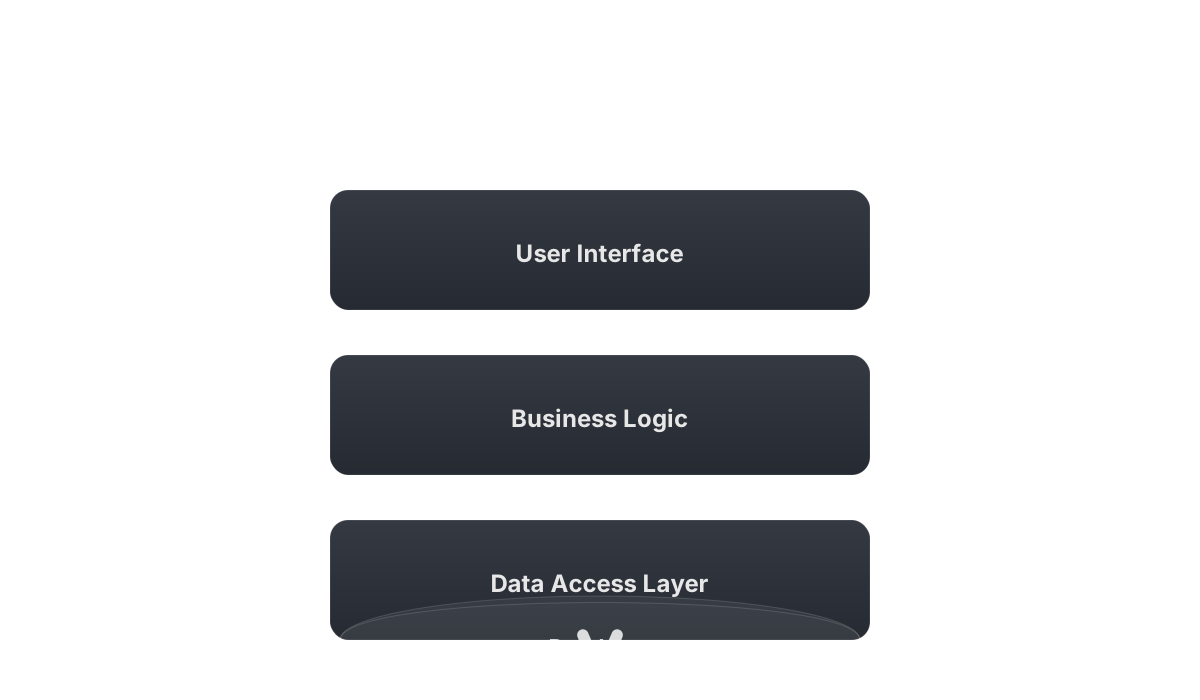

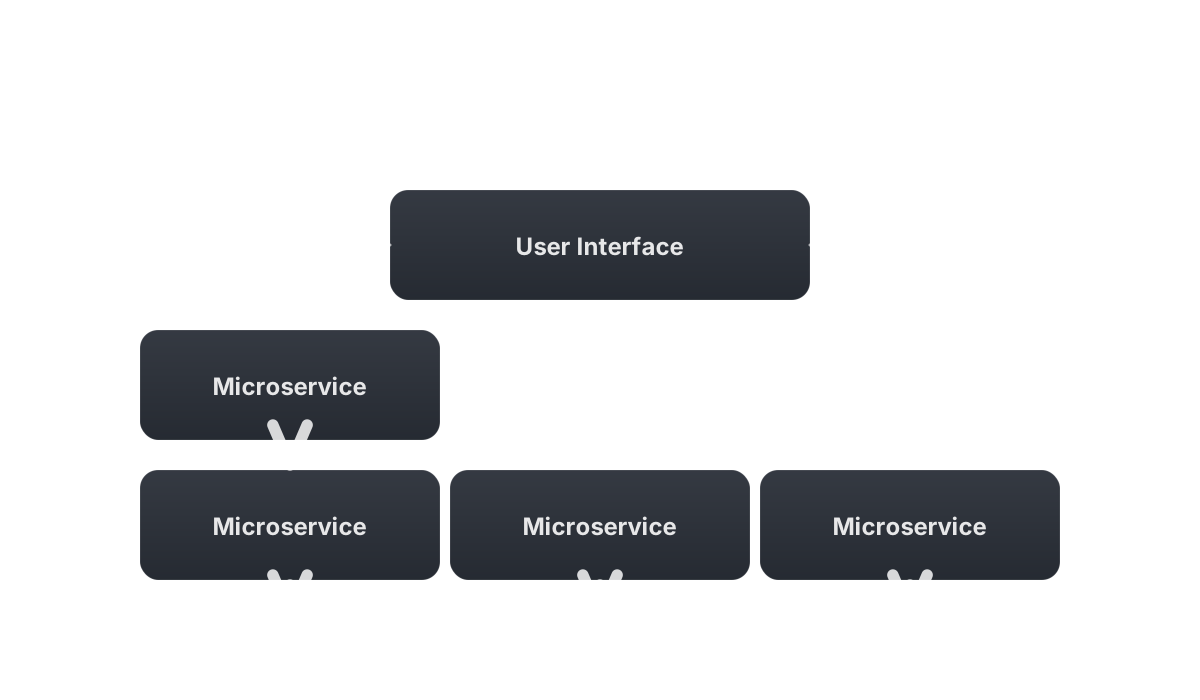
We design and implement microservices architecture that grows with your business. No more monolith headaches, just reliable systems that deliver real ROI.
Get Your Architecture Plan
Trusted by startups and global leaders









We work with teams stuck in monolith hell, startups planning their next growth phase, and enterprises needing to modernize legacy systems. Our approach is practical: we build what you need, not what sounds impressive in a presentation.
We map out how your current system should split into services. This includes defining boundaries, data flows, and integration patterns. Best for teams planning a migration or starting from scratch.
We gradually extract services from your monolith without breaking what already works. Ideal for businesses with existing systems that need to scale but can't afford a full rewrite.
We build the APIs your services need to communicate effectively. Includes versioning, documentation, and governance. Perfect for teams that want consistent, maintainable interfaces.
We set up the CI/CD pipelines, container orchestration, and monitoring your teams need to deploy independently. Suited for companies moving to cloud-native operations.
We implement the logging, metrics, and alerting needed to run distributed systems confidently. Right for teams who need to know what's happening across their services.
Most successful migrations happen gradually. We help you understand where you are today, where you want to be, and how to get there without breaking what already works. The key is knowing what to change first and why.
Different industries face different scaling challenges. We focus on sectors where microservices solve actual business problems, not just technical ones. Here's where we've seen the most impact.
Different AI models solve different problems. We help you pick the right approach based on what you need to accomplish, not what sounds most impressive.
These models write human-like text for emails, reports, and customer responses. Best for businesses needing to create content at scale without hiring more writers.
Creates visuals from text descriptions for marketing, product mockups, and social media. Suited for teams that need custom images without design resources.
Converts spoken words to text with high accuracy across languages. Ideal for transcription services and voice-activated applications.
Sorts data into categories like spam detection, sentiment analysis, or content moderation. Perfect for automating decisions that follow clear rules.
We train models on your specific data and business processes. Designed for companies with unique needs that standard models can't handle.
Build systems that let your teams work independently while staying connected.
Plan Your Architecture
Many companies can split systems into services, but how they do it and what happens next matters most. We focus on business outcomes and long-term success, not just technical implementation.
We start by understanding your scaling challenges, then design services accordingly. This means you get solutions that solve real business problems, not just technically elegant architectures.
We help you move to microservices incrementally so your business keeps running. No risky rewrites or extended downtime - just steady progress toward your goals.
We design services around how your teams actually work, not around perfect diagrams. This approach means your developers can own and deploy services independently.
You get clear, usable documentation that your team can actually follow. No academic papers or theoretical guides - just real instructions for real developers.
We choose tools based on what solves real problems for your team. No chasing trends - just proven technologies that help you ship faster and operate confidently.


Microservices work well when different teams need to update different parts of your system independently. If you're constantly coordinating releases or one team's work blocks another's, it's worth considering.
We define clear service boundaries based on business capabilities, not technical layers. Each service owns its data and has a specific job. This prevents the "everything talks to everything" problem.
Yes. We start by mapping your current system, then identify which services to extract first. Most migrations happen gradually over 3-6 months while keeping everything running.
Each service handles its own security, but we connect them through secure patterns like service mesh and proper authentication. Think of it as secure rooms in a secure building.
Most teams ship their first independent service within 8-12 weeks. Full microservices benefits usually appear after 3-4 services are running independently.
No. In fact, we recommend against it. We help you pick the most valuable service to build first, prove the approach, then expand from there.