
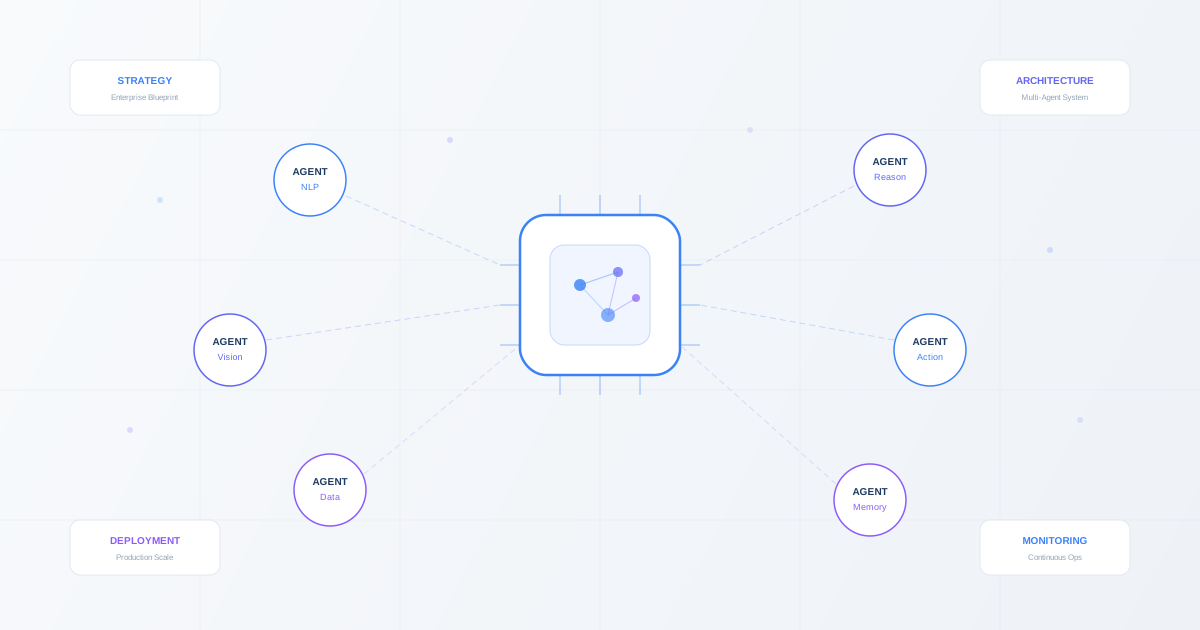
Strategic Insights
- Enterprise AI agent development requires a holistic approach combining technical excellence, business strategy, and organizational change management.
- Successful implementation demands careful attention to security, compliance, and scalability from day one—not as afterthoughts.
- The competitive advantage gained through intelligent AI agents comes from continuous optimization and expansion, not one-time deployment.
The Enterprise AI Imperative
The convergence of computational power, algorithmic breakthroughs, and enterprise data maturity has created an unprecedented opportunity for organizations to deploy intelligent AI agents at scale. These autonomous systems are no longer experimental projects—they are becoming core components of digital transformation strategies across every major industry.
Forward-thinking executives recognize that enterprise AI agent development represents a fundamental shift in how organizations operate, make decisions, and serve customers. The question is no longer whether to invest in AI capabilities, but how quickly and effectively these systems can be integrated into core business processes to create sustainable competitive advantages.
Why Leading Organizations Are Investing Now
Market dynamics have created a critical window for strategic AI investment. Organizations that deploy sophisticated AI agents today are establishing operational efficiencies and customer experiences that competitors will struggle to replicate. The convergence of mature AI frameworks, cloud infrastructure, and enterprise readiness has eliminated many of the technical barriers that previously slowed adoption.
Research from leading analyst firms indicates that enterprises implementing AI agents are achieving 30-40% improvements in operational efficiency while simultaneously enhancing customer satisfaction scores by 25-35%. These metrics demonstrate that intelligent AI agents for business deliver both cost optimization and revenue enhancement—rare combinations in technology investments.
The competitive advantage window
Leading enterprises are deploying AI agents now. Will you lead or follow?
Start Your AI StrategyUnderstanding Enterprise AI Agent Development
Enterprise AI agent development encompasses the design, implementation, and optimization of autonomous systems that can perceive, reason, and act within complex business environments. Unlike traditional automation tools, these agents possess the ability to understand context, learn from interactions, and make decisions with minimal human intervention.
The development process requires deep expertise in multiple domains including machine learning, natural language processing, knowledge representation, and enterprise systems integration. Successful implementations blend cutting-edge AI capabilities with pragmatic business requirements to create solutions that deliver immediate value while maintaining long-term adaptability.
Core Components of Intelligent AI Agents
Perception and Context Understanding
Modern AI agents must comprehend complex business contexts, including industry-specific terminology, organizational hierarchies, and process workflows. This capability requires sophisticated natural language processing combined with domain-specific knowledge graphs that capture institutional expertise and business rules.
Reasoning and Decision Engines
The cognitive core of enterprise AI agents combines rule-based logic with machine learning models to evaluate situations, weigh alternatives, and select optimal actions. These reasoning engines must balance speed with accuracy, ensuring decisions align with business objectives while maintaining auditability and compliance requirements.
Action and Integration Capabilities
Effective AI agents require robust integration frameworks that enable seamless interaction with enterprise systems including ERP platforms, CRM databases, and communication tools. AI integration services must ensure secure, reliable connections while maintaining data governance and compliance standards.
Learning and Adaptation Systems
The most valuable AI agents continuously improve through experience, learning from successful and unsuccessful interactions to refine their decision-making processes. These learning systems must be carefully governed to ensure improvements align with business objectives while preventing unintended consequences or bias amplification.
Architecture Patterns for Scale
Microservices-Based Agent Design
Enterprise-grade AI agents benefit from modular architectures that separate perception, reasoning, and action components into independent services. This approach enables independent scaling, easier maintenance, and the ability to upgrade specific capabilities without disrupting entire systems.
Event-Driven Communication Patterns
Scalable AI implementations leverage event-driven architectures that allow agents to respond to business events in real-time while maintaining loose coupling between system components. This pattern supports high-volume processing and enables graceful degradation under load.
Hybrid Cloud Deployment Models
Most enterprises require flexible deployment strategies that balance data security, performance requirements, and cost considerations. Hybrid architectures enable sensitive data processing on-premises while leveraging cloud resources for intensive computational tasks and model training.
Integration with Enterprise Systems
Successful AI integration services must address both technical and organizational challenges. Technical integration requires robust APIs, data mapping capabilities, and real-time synchronization mechanisms. Organizational integration demands change management strategies, user training programs, and clear governance frameworks.
- Core System Integration: Connect AI agents with ERP, CRM, and other mission-critical platforms to access necessary data and execute actions.
- Communication Platform Integration: Enable agents to interact through email, chat, voice, and other channels preferred by business users.
- Data Warehouse Integration: Provide agents with access to historical data and analytics capabilities for informed decision-making.
- Security Framework Integration: Ensure agents operate within established security protocols and compliance requirements.
Strategic Implementation Framework
Deploying enterprise AI agents requires a structured approach that balances speed to market with long-term sustainability. Organizations that follow disciplined implementation methodologies achieve higher success rates and faster value realization. This framework provides a roadmap for transforming AI potential into business reality.

Phase 1: Strategic Assessment and Planning
The foundation of successful AI implementation begins with comprehensive strategic assessment. Organizations must evaluate their current capabilities, identify high-value use cases, and establish clear success metrics. This phase typically spans 4-6 weeks and delivers a detailed roadmap for AI transformation.
- Capability Assessment: Evaluate existing data infrastructure, technical expertise, and organizational readiness for AI adoption.
- Use Case Prioritization: Identify and rank potential AI applications based on business impact, feasibility, and strategic alignment.
- ROI Modeling: Develop detailed financial projections for prioritized use cases, including both direct and indirect benefits.
- Risk Assessment: Identify potential technical, operational, and regulatory risks associated with AI implementation.
Phase 2: Proof of Concept and Validation
Before committing to full-scale deployment, organizations should validate AI capabilities through focused proof of concept implementations. These controlled experiments demonstrate technical feasibility while providing valuable insights into integration challenges and user adoption patterns.
Effective proof of concepts typically focus on high-impact, manageable use cases that can demonstrate clear value within 8-12 weeks. Success criteria should be established upfront, with regular milestone reviews to ensure alignment with business objectives.
- Technical Validation: Confirm that AI agents can effectively handle real-world scenarios and edge cases.
- Integration Testing: Validate connectivity and data flow with core enterprise systems.
- User Acceptance Testing: Gather feedback from actual users to refine agent behavior and user experience.
- Performance Benchmarking: Establish baseline metrics for accuracy, response time, and scalability.
Phase 3: Enterprise-Scale Deployment
With validation complete, organizations can proceed to enterprise-scale deployment. This phase requires careful coordination between technical teams, business units, and external partners to ensure smooth transition from pilot to production.
Deployment strategies should prioritize user adoption and change management alongside technical implementation. Comprehensive training programs, clear communication plans, and ongoing support mechanisms are essential for achieving desired business outcomes.
- Infrastructure Preparation: Scale computing resources, establish monitoring systems, and implement security controls.
- Change Management: Deploy communication strategies, training programs, and support structures to facilitate user adoption.
- Gradual Rollout: Implement phased deployment to minimize disruption while gathering performance data.
- Performance Monitoring: Establish comprehensive monitoring and alerting systems to ensure reliable operation.
Phase 4: Optimization and Expansion
The final phase focuses on continuous improvement and expansion of AI capabilities. Organizations should establish regular optimization cycles to refine agent performance, expand use cases, and integrate emerging AI technologies. This ongoing process ensures that AI investments continue to deliver increasing value over time.
Successful organizations treat AI deployment as the beginning of a transformation journey rather than a project completion. Regular assessment of business impact, user feedback, and technological advances guides strategic decisions about expansion and enhancement.
Industry-Specific Applications and Use Cases
While enterprise AI solutions share common technical foundations, their applications vary significantly across industries. Understanding sector-specific requirements and opportunities is essential for designing AI agents that deliver maximum business value.
Financial Services and Banking
Financial institutions leverage AI agents for fraud detection, risk assessment, customer service automation, and compliance monitoring. These applications require exceptional accuracy, auditability, and regulatory compliance while handling sensitive financial data.
- Automated Underwriting: AI agents evaluate loan applications by analyzing financial documents, credit history, and risk factors.
- Fraud Detection: Real-time monitoring systems identify suspicious transactions and patterns indicative of fraudulent activity.
- Customer Advisory: Intelligent agents provide personalized financial advice and product recommendations based on client profiles.
- Compliance Monitoring: Automated systems ensure adherence to regulatory requirements and generate audit documentation.
Healthcare and Life Sciences
Healthcare organizations deploy AI agents for patient engagement, clinical decision support, administrative automation, and research acceleration. These applications must meet stringent privacy requirements while ensuring accuracy in critical medical contexts.
- Patient Triage: AI agents assess patient symptoms and medical history to prioritize care and recommend appropriate treatments.
- Clinical Trial Matching: Intelligent systems identify eligible patients for clinical trials based on complex medical criteria.
- Administrative Automation: Agents handle scheduling, billing, and insurance claims processing to reduce administrative burden.
- Drug Discovery Support: AI systems analyze research data and identify potential therapeutic compounds.
Manufacturing and Supply Chain
Manufacturing companies utilize AI agents for predictive maintenance, quality control, supply chain optimization, and production scheduling. These applications require real-time data processing and the ability to integrate with industrial control systems and IoT devices.
- Predictive Maintenance: AI agents monitor equipment performance and predict failures before they occur.
- Quality Assurance: Automated visual inspection systems identify defects and quality issues in real-time.
- Supply Chain Optimization: Intelligent agents optimize inventory levels, routing, and supplier relationships.
- Production Scheduling: AI systems optimize manufacturing processes based on demand, capacity, and resource constraints.
Retail and E-commerce
Retail organizations implement AI agents for customer service, inventory management, personalized marketing, and demand forecasting. These applications must handle high-volume interactions while delivering consistent customer experiences across multiple channels.
- Personal Shopping Assistants: AI agents provide personalized product recommendations and shopping guidance.
- Inventory Optimization: Intelligent systems manage stock levels across multiple locations and sales channels.
- Customer Service Automation: AI agents handle inquiries, returns, and support requests across multiple channels.
- Dynamic Pricing: Automated systems adjust prices based on demand, competition, and market conditions.
Security, Compliance, and Governance
Enterprise AI agent development must prioritize security, compliance, and governance from the outset. Organizations operating in regulated industries face additional requirements for data protection, audit trails, and explainability. Neglecting these considerations can result in significant legal, financial, and reputational consequences.
Enterprise Security Frameworks
AI agents must operate within established security frameworks that protect sensitive data, prevent unauthorized access, and ensure system integrity. Security considerations must be addressed at every level of the AI stack, from data ingestion to model deployment.
- Data Encryption: Implement end-to-end encryption for data at rest, in transit, and during processing.
- Access Controls: Establish role-based access controls and authentication mechanisms for AI systems.
- Threat Detection: Deploy monitoring systems to identify and respond to security threats in real-time.
- Vulnerability Management: Regular security assessments and patch management for AI infrastructure.
Regulatory Compliance Requirements
Different industries face specific regulatory requirements that impact AI agent development and deployment. Financial services must comply with SEC and FINRA regulations, healthcare organizations must follow HIPAA guidelines, and multinational companies must navigate GDPR and other data protection laws.
Compliance considerations must be integrated into AI system design rather than treated as afterthoughts. This includes implementing audit trails, explainability features, and documentation processes that demonstrate regulatory adherence.
Data Governance and Privacy
Effective data governance is essential for responsible AI implementation. Organizations must establish clear policies for data collection, usage, retention, and disposal. Privacy considerations must be addressed through technical measures such as anonymization and differential privacy.
AI agents should be designed with privacy-by-design principles that minimize data collection while maintaining functionality. Regular audits and assessments ensure ongoing compliance with evolving privacy regulations and organizational policies.
Building the Business Case
Successful AI implementation strategy requires compelling business cases that demonstrate clear value and justify investment. Executive decision-makers need comprehensive analysis that addresses both financial returns and strategic benefits.
ROI Analysis and Value Metrics
ROI analysis for AI agent development must capture both direct financial benefits and indirect strategic advantages. Direct benefits include cost reduction, revenue enhancement, and productivity improvements. Strategic benefits encompass competitive positioning, customer satisfaction, and market differentiation.
- Operational Efficiency: Measure reductions in processing time, labor costs, and error rates.
- Revenue Enhancement: Track improvements in customer acquisition, retention, and lifetime value.
- Risk Reduction: Quantify improvements in compliance, security, and operational reliability.
- Innovation Capacity: Assess increased ability to launch new products and enter new markets.
Total Cost of Ownership
TCO analysis for AI agents must extend beyond initial development costs to include ongoing expenses for infrastructure, maintenance, training, and optimization. Organizations should budget 25-35% of initial investment annually for these ongoing requirements.
- Development Costs: Initial investment in strategy, design, development, and testing.
- Infrastructure Expenses: Computing resources, storage, networking, and cloud services.
- Maintenance and Support: Ongoing monitoring, updates, bug fixes, and user support.
- Optimization and Enhancement: Continuous improvement, model retraining, and feature expansion.
Risk Assessment and Mitigation
Comprehensive risk assessment identifies potential challenges and develops mitigation strategies before they impact business operations. Technical risks include model accuracy, system reliability, and integration complexity. Business risks encompass user adoption, competitive response, and regulatory changes.
Effective risk management requires continuous monitoring and adaptive strategies that evolve with AI capabilities and business requirements. Regular risk assessments ensure that mitigation measures remain effective as systems scale and environments change.
Common Implementation Mistakes to Avoid
Even well-resourced organizations can stumble when implementing AI agents. Understanding common pitfalls helps leaders avoid costly mistakes and accelerate value realization.
- Starting with Technology Instead of Problems: Successful AI initiatives begin with clear business problems, not fascination with technology.
- Underestimating Data Requirements: AI agents need high-quality, well-structured data to perform effectively.
- Neglecting Change Management: Technology adoption fails when users are not properly trained and supported.
- Treating AI as a Project Instead of a Capability: AI requires ongoing investment and optimization, not one-time implementation.
- Ignoring Security and Compliance: Regulatory and security requirements must be addressed from the beginning.
- Lack of Executive Sponsorship: AI transformation requires strong leadership support and cross-functional collaboration.
The Future of Enterprise AI Agents
The evolution of enterprise AI agents will continue to accelerate as algorithms become more sophisticated, computing power increases, and organizations develop greater AI maturity. Future developments will focus on enhanced reasoning capabilities, improved personalization, and deeper integration with business processes.
Emerging trends include multimodal AI agents that can process text, voice, and visual inputs simultaneously; federated learning approaches that enable collaboration without data sharing; and autonomous systems that can self-improve and adapt to changing business conditions. Organizations that establish strong AI foundations today will be best positioned to leverage these advancements.
Strategic Next Steps
The journey to enterprise AI agent excellence begins with strategic planning and partner selection. Organizations should start by assessing their current capabilities, identifying high-value use cases, and developing comprehensive implementation roadmaps.
Partner selection is critical for success. Look for AI agent development services providers with demonstrated enterprise experience, industry-specific expertise, and proven implementation methodologies. The right partner will help navigate technical challenges while ensuring alignment with business objectives and regulatory requirements.
The window for establishing competitive advantage through AI agents is narrowing. Organizations that act decisively today will shape their industries tomorrow. The question is not whether your competitors will deploy AI agents—it is whether they will do so before you.
Transform your enterprise with intelligent AI agents
Our team of AI specialists helps organizations design, develop, and deploy enterprise-grade AI agents that deliver measurable business value.