
Key Takeaways
- AI lifts transportation performance across the board — tighter ETAs, better asset use, fewer safety incidents, and lower operating costs.
- The most impactful use cases span demand planning, dynamic routing, predictive maintenance, driver safety coaching, and customer visibility tools.
- None of it works without clean telemetry data, well-defined data contracts, and an MLOps setup that keeps models healthy after launch.
Why Transportation Needs AI Now
Transportation is a margin game. Fuel costs climb, customers want same-day delivery, regulations keep tightening, and one missed route can blow an entire day's profit. AI gives logistics teams a way to make faster, smarter decisions — from predicting demand spikes to rerouting trucks around a highway closure in real time.
Companies already leveraging AI in their fleets report around 35% efficiency gains and 25% cost reductions. More importantly, they are seeing fewer accidents and happier customers because deliveries arrive when promised.

10 Tangible Benefits
AI does not just shave minutes off routes. It compounds across the operation — tighter ETAs build customer trust, lower fuel burn improves margins, and better maintenance prevents the breakdowns that cascade into missed deliveries.
- More Accurate ETAs: ML models factor in traffic, weather, loading times, and driver patterns to give customers arrival windows they can actually rely on.
- Lower Fuel Costs: Route optimisation engines find the shortest, least-congested paths in real time, trimming fuel spend on every trip.
- Better On-Time Rates: Smart scheduling and dispatch keep deliveries on track by anticipating bottlenecks before they happen.
- Fewer Accidents and Claims: In-cab sensors plus AI coaching flag risky driving behaviour in the moment, cutting incident rates and insurance costs.
- Predictive Maintenance: Sensor data and ML models spot brake wear or engine trouble early, so trucks get fixed during planned downtime instead of on the roadside.
- Dynamic Rerouting: When a road closes or a customer reschedules, the system recalculates and redispatches within seconds.
- Higher Load Utilisation: AI-based load planning fills trucks more efficiently, increasing revenue per mile without adding vehicles.
- Smarter Dispatch: Automated dispatch matches the right driver and truck to each job based on location, capacity, and delivery window — no more manual spreadsheet juggling.
- Real-Time Customer Tracking: Live tracking links and proactive delay alerts keep customers informed and reduce "where's my delivery?" calls.
- Smaller Carbon Footprint: Fewer empty miles, less idling, and optimised routes all translate into measurable emissions reductions.

Use Cases in Practice
Here is where theory meets tarmac. These ten use cases are already running in production at fleets of varying sizes — from regional carriers to global 3PLs.
- Demand Forecasting and Capacity Planning: Models analyse historical shipment volumes, seasonal trends, and economic indicators to tell planners how many trucks and drivers they will need next week — or next quarter.
- Dynamic Route Optimisation: Algorithms recalculate the best path for every truck as conditions change, balancing delivery windows, fuel cost, and driver hours-of-service limits.
- Yard and Dock Management: Computer vision tracks trailer positions in real time, while scheduling algorithms reduce dock wait times and keep yard jockeys moving efficiently.
- Driver Safety Coaching: Dashcam and telematics data feed into models that score driving events, flag risky habits, and generate personalised coaching plans for each driver.
- Predictive Fleet Maintenance: IoT sensors on engines, brakes, and tyres stream data to ML models that forecast failures days or weeks ahead, turning unplanned breakdowns into scheduled shop visits.
- Automated Vehicle Inspection: Camera-based systems scan trucks during check-in, catching tyre damage, light outages, and body damage without a manual walk-around.
- Shipment Anomaly Detection: Temperature excursions, unexpected stops, and route deviations trigger instant alerts so dispatchers can intervene before cargo is compromised.
- Live ETA and Proactive Alerts: Customers and consignees get continuously updated arrival times and automatic notifications when delays occur — no phone calls needed.
- Fraud and Claims Analytics: ML models spot patterns in damage claims, billing discrepancies, and suspicious activity, helping teams investigate faster and reduce losses.
- Network Design Simulation: Digital twins of the distribution network let planners test "what-if" scenarios — new hubs, lane changes, carrier swaps — before committing real money.
Architecture Snapshot
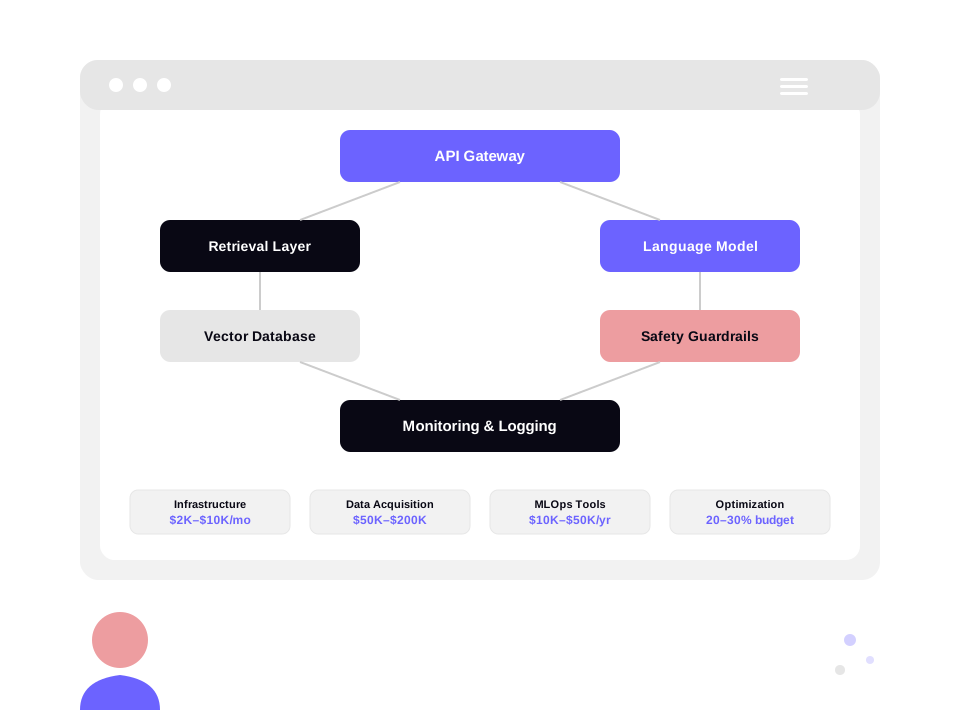
Under the hood, a transportation AI stack pulls telemetry from vehicles, feeds it through a feature store, runs it against trained models, and pushes results into the dispatch, routing, and customer-facing apps your team already uses.

How to Get Started
Rolling out AI across a fleet does not have to be a multi-year odyssey. Start narrow, prove value fast, and scale what works.
- Check Your Data First: Catalogue your telemetry feeds, TMS exports, and third-party data sources. Clean, consistent data is the prerequisite — if your GPS pings are patchy or your load records live in spreadsheets, fix that before anything else.
- Pick One Lane and One KPI: Choose a single corridor and a single metric (on-time percentage, cost per mile, or fuel efficiency) and run a focused pilot over 8-12 weeks. Use the results to justify expanding.
- Build MLOps From Day One: Set up model monitoring, drift detection, and automated retraining pipelines early. AI that works great in a pilot but degrades silently in production helps no one.

Looking to bring AI into your fleet?
Go from concept to a working pilot in weeks — with measurable results.
We'll help you pick the right use case, wire up your data, and launch a proof of concept that drives real operational gains.
Consult Our Experts