
Key Takeaways
- AI sharpens underwriting, pricing, and the buyer journey in both residential and commercial real estate by turning raw data into actionable signals.
- Getting value from AI means getting your data house in order first — clean MLS feeds, solid portal integrations, and clear data ownership are table stakes.
- Start small: pick one KPI (like speed-to-close), run a focused pilot, prove the ROI, then expand from there.
Why Real Estate Is Going Data-First
Real estate has always run on relationships and gut instinct, but AI is adding a powerful data layer on top. From sourcing deals to closing them, machine learning now helps teams spot patterns in pricing, predict market shifts, and automate the busywork that slows transactions down.
The numbers back it up: firms using AI-driven tools report roughly 35% gains in operational efficiency and 25% better returns on investment. That gap between early adopters and everyone else is only widening as the technology matures.

16 AI Applications in Property
AI is not one magic tool — it is a collection of targeted solutions that solve specific problems across buying, selling, and managing property. Here are sixteen real-world applications already making a difference.
- Lead Scoring and Qualification: ML models rank prospects based on browsing behaviour, demographics, and market signals so sales teams spend their time on the leads most likely to convert.
- Automated Valuation Models (AVMs): These pull from MLS records, tax data, and local comps to generate real-time property estimates — useful for both buyers and lenders.
- Dynamic Pricing: Algorithms track comparable listings, demand trends, and seasonal patterns to recommend the right asking price and adjust it as the market moves.
- Listing Copy and Compliance: NLP tools draft property descriptions, marketing copy, and flag any fair-housing or regulatory issues before content goes live.
- Smart Property Search and Recommendations: Instead of basic filters, AI learns what a buyer actually wants and serves up matches they would not have found on their own.
- Fraud Detection: Pattern-recognition models flag suspicious transactions, fake identities, and wire-fraud attempts before they cause damage.
- Tenant Screening: AI scores applicants using credit history, rental track records, and employment data to help landlords pick reliable tenants with less bias.
- Virtual Tours and AI Staging: Computer vision creates immersive 3D walkthroughs and digitally stages empty rooms so remote buyers can picture themselves in the space.
- Document Extraction for KYC and Mortgages: NLP pulls key figures from pay stubs, tax returns, and bank statements, cutting mortgage processing time from days to hours.
- Contract Review: AI reads lease agreements and purchase contracts, highlights risky clauses, and suggests negotiation points — acting as a first-pass legal reviewer.
- Customer Service Chatbots: Conversational AI handles routine questions about listings, schedules showings, and routes complex queries to human agents.
- Predictive Maintenance: Sensors and ML models forecast HVAC failures, plumbing issues, and elevator breakdowns so property managers fix things before tenants complain.
- Energy and Sustainability Management: Smart building systems track energy usage floor by floor and adjust lighting, heating, and cooling automatically to cut costs and carbon.
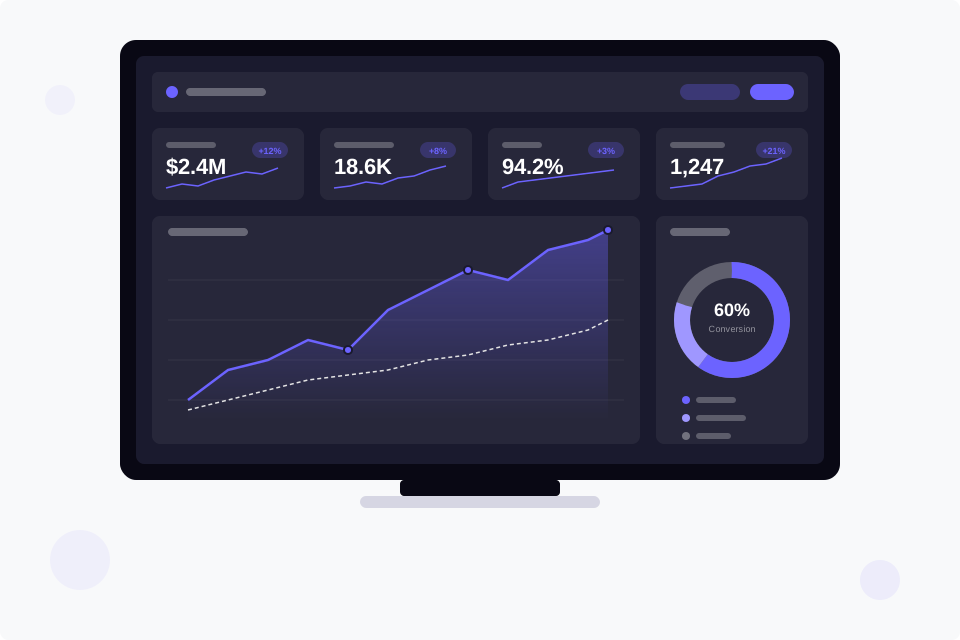
- Portfolio Analytics Dashboards: Real-time dashboards roll up occupancy, NOI, cap rates, and market benchmarks so investors spot underperformers quickly.
- Tenant Churn Prediction: Models flag tenants likely to leave at renewal time, giving property managers a chance to intervene with retention offers early.
- Agent Copilots: AI assistants help agents with market research, CRM follow-ups, and deal tracking so they can close more transactions with less admin work.
Architecture at a Glance
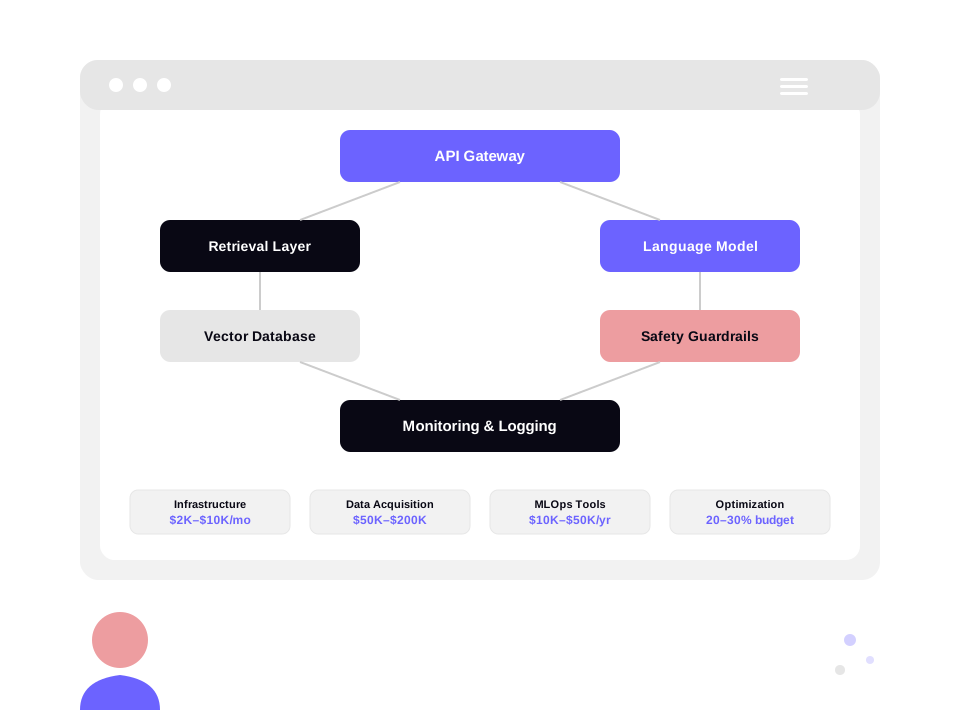
A typical AI stack for real estate connects MLS feeds, property databases, and third-party APIs into a shared data layer. ML models sit on top, and their outputs flow into the tools agents, investors, and tenants actually use every day.
Getting Started
You do not need to overhaul everything at once. The firms that get the most from AI follow a simple three-step playbook that keeps risk low and learning fast.
- Audit Your Data: Map out your MLS feeds, CRM records, and portal integrations. Identify gaps, duplicates, and quality issues — AI is only as good as the data behind it.
- Run a Focused Pilot: Pick one metric that matters (speed-to-close, lead conversion, or tenant retention) and build an 8-12 week proof of concept around it. Use the results to build the business case for wider rollout.
- Set Up Monitoring: Once a model is live, you need to watch for drift and degradation. Build dashboards that track accuracy, cost, and user adoption so you can course-correct early.

Ready to put AI to work in property?
Build an AI pilot that proves its value in weeks, not quarters.
We'll help you identify the highest-impact use case, design the data pipeline, and launch a working proof of concept.
Consult Our Experts