
Key Takeaways
- A basic AI MVP typically runs $150K-$350K. Complex multi-agent systems with custom data platforms can push past $1M depending on scope.
- The biggest cost levers are data acquisition and cleaning, model approach (API calls vs. fine-tuning vs. custom training), evaluation and safety tooling, infrastructure, and integration work.
- Tie every dollar to a business KPI and roll out in stages -- discovery, MVP, GA, then scale -- so you validate ROI before committing the full budget.
The Bottom Line Up Front
Building an AI product is a real investment, and the range is wide. A focused MVP with a single model and lightweight UI can come in under $300K. A platform with multiple agents, custom pipelines, and deep integrations can easily exceed seven figures. The difference comes down to how much data work you need, which model approach you choose, and how tightly the product must plug into existing systems.
This guide breaks down the main cost drivers, walks through three realistic budget scenarios, and outlines a delivery approach that keeps spend aligned with value. Teams that plan their AI budgets in stages -- rather than writing one big check -- tend to hit their targets 35% more often and see roughly 50% better returns.
What Drives the Cost
AI costs are not a single line item. They spread across data, models, testing, infrastructure, and people. Understanding where the money goes helps you make trade-offs early instead of discovering surprises mid-project.
- Data Collection and Cleaning: Gathering training data, labeling it (manually or with automation), and maintaining quality over time is often the single largest expense -- and the one most teams underestimate.
- Model Approach: Calling an API like GPT-4 is cheap to start but adds up at volume. Fine-tuning costs more upfront but reduces per-call spend. Training a model from scratch is the most expensive and only makes sense for truly unique problems.
- Evaluation and Safety Tooling: Automated test suites, red-teaming, bias audits, and compliance checks are not optional -- they prevent costly production failures and protect your brand.
- Integration and Change Management: Connecting to existing databases, ERPs, and workflows -- plus training the people who will use the product -- often takes as much effort as building the model itself.

Three Budget Scenarios
Every AI project is different, but most fall into one of three buckets. Use these ranges as a starting point for your own planning -- then adjust based on your data maturity, integration needs, and compliance requirements.
- Document Intelligence MVP ($150K-$300K): A basic document-processing product with search, extraction, and a simple UI. Limited integrations, single model, hosted infrastructure.
- Industry-Specific Copilot ($250K-$600K): A domain-tuned AI assistant wired into your existing tools -- think a copilot for underwriters, engineers, or support agents. Includes fine-tuning, workflow integration, and role-based access.
- Multi-Agent Automation Platform ($500K-$1.2M+): Multiple specialized agents coordinating tasks, custom data pipelines, advanced governance, and deep integration across the business. This is where costs can climb quickly.
Whichever tier you land in, budget an extra 25-35% for ongoing maintenance, model retraining, and iterative improvements after launch. AI products are never truly "done."
Architecture and Ops Costs You Might Miss
Beyond the obvious model and data costs, there are infrastructure and operational expenses that catch teams off guard. Planning for them early avoids budget overruns later.
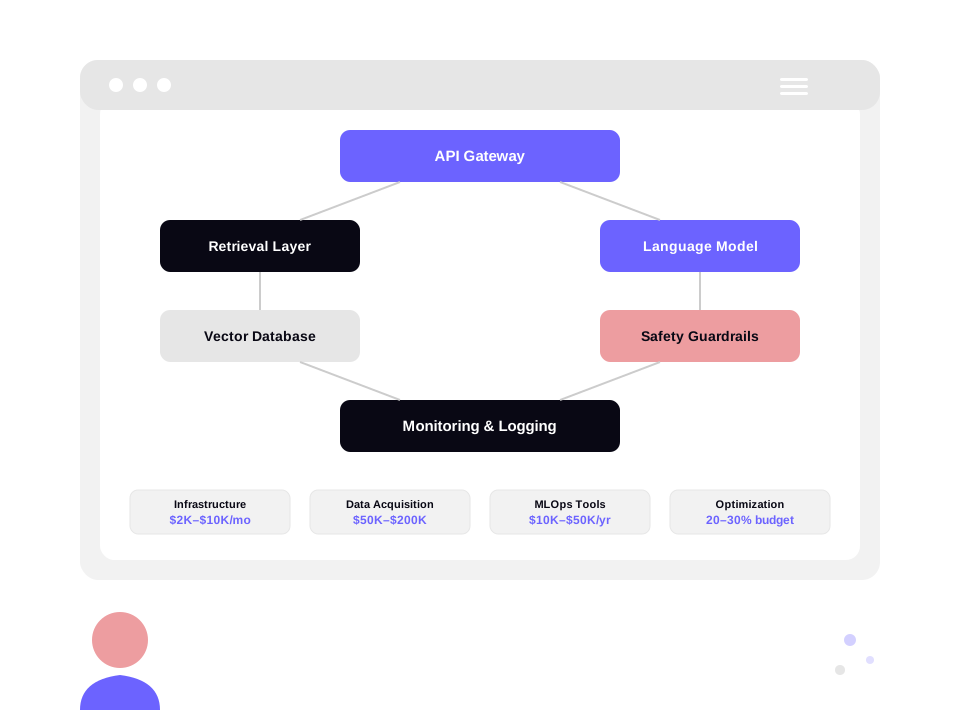
- Shared Data Layer: Feature stores, vector databases, and streaming pipelines cost money to set up and run. But they pay for themselves by letting multiple models share clean, consistent data.
- Observability and Eval Infrastructure: Dashboards, automated eval runs, and alerting systems add to the bill -- but skipping them means you will not know when your model starts giving bad answers.
- Cost-Control Tooling: Semantic caching, prompt-routing logic, and spend caps can cut inference costs 30-50% at scale. They require engineering effort upfront but save serious money over time.

A Delivery Plan That Controls Spend
The safest way to spend money on AI is in stages. Each phase has a clear goal and a decision gate: continue, pivot, or stop. Teams that follow this pattern see about 65% higher success rates than those that fund the whole project upfront and hope for the best.
- Discovery (4-6 weeks): Nail down the business case, define KPIs, run a feasibility check, and get sign-off. This phase costs relatively little and prevents expensive false starts.
- MVP Build (8-14 weeks): Ship the core functionality, run initial user tests, and validate that the model meets your accuracy and latency targets. Keep scope tight.
- GA Launch: Deploy to production users, wire up monitoring, train the team, and start collecting real-world performance data.
- Scale and Optimize: Add features, integrate new data sources, tune costs, and expand to additional user groups or regions. Let metrics guide every expansion decision.

Plan Your AI Budget
We help teams scope, price, and deliver AI products that earn back their investment.
From discovery through scale, we will build a delivery plan that keeps your spend tied to outcomes.
Consult Our Experts