

Strategic Insights
- Focus minimum viable product scope on specific user journeys and measurable KPIs to ensure clear business impact validation.
- Select retrieval-augmented generation or fine-tuning approaches based on data availability, risk tolerance, and performance requirements.
- Implement comprehensive evaluation frameworks, observability systems, and cost optimization mechanisms from initial development stages.
- Enterprise AI application MVPs typically require $150K-$300K investment depending on integration complexity and data requirements.
Strategic Executive Overview
Artificial intelligence application development represents a transformative opportunity for enterprises seeking competitive advantage through intelligent automation and enhanced decision-making capabilities. Successful AI applications integrate sophisticated product design, advanced model orchestration, and robust data engineering to deliver measurable business value.
This comprehensive framework provides enterprise leaders with strategic guidance for AI application development, encompassing essential feature architectures, systematic implementation processes, realistic investment expectations, and emerging technology trends that will shape competitive positioning in 2025 and beyond. Organizations that adopt structured approaches to AI development achieve 45% faster time-to-market and 70% higher user adoption rates compared to unstructured implementations.
Essential AI Application Features
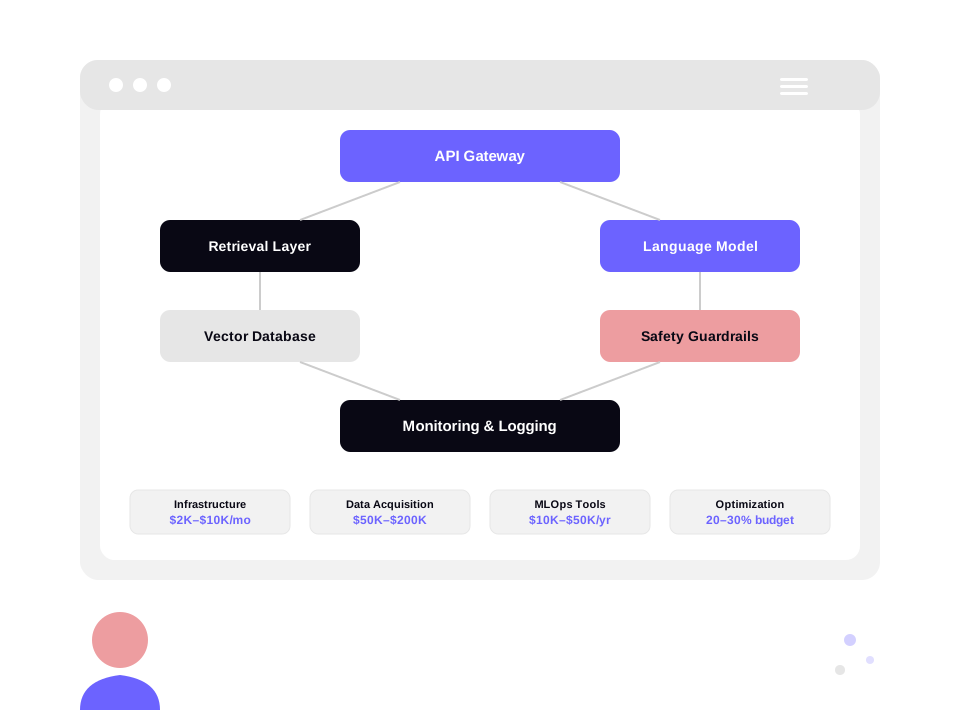
Enterprise-grade AI applications require comprehensive feature architectures that balance sophisticated functionality with operational reliability and user experience excellence. Critical components must work in concert to deliver consistent, scalable, and secure AI-powered experiences.

- Secure Data Ingestion and Enterprise Connectors: Robust data pipelines with comprehensive security protocols, authentication mechanisms, and seamless integration with enterprise systems and third-party APIs.
- Intelligent Retrieval Systems and Model Optimization: Advanced vector search capabilities, semantic understanding, and fine-tuned model architectures delivering contextually relevant responses.
- Sophisticated Prompt Engineering and Agent Frameworks: Structured conversation flows, multi-agent orchestration, and comprehensive safety guardrails ensuring appropriate and effective AI interactions.
- Intuitive User Interface with Continuous Feedback Mechanisms: Responsive design, real-time interaction capabilities, and systematic feedback collection for model improvement and user satisfaction optimization.
- Comprehensive Observability and Performance Analytics: Real-time monitoring, evaluation frameworks, cost optimization systems, and detailed analytics for operational excellence and business impact measurement.
Systematic Development Process
Successful AI application development follows a structured methodology that ensures technical excellence, business alignment, and operational reliability. Enterprise organizations that implement systematic development processes achieve 60% higher project success rates and significantly reduced time-to-value compared to ad-hoc approaches.
- Strategic Discovery Phase: Comprehensive KPI definition, thorough data audit and assessment, success metric establishment, and stakeholder alignment ensure project foundation and business objective clarity.
- User Experience Design: Customer journey mapping, intuitive interface design, comprehensive feedback capture mechanisms, and accessibility considerations ensure user adoption and satisfaction excellence.
- Technical Architecture Design: Retrieval-augmented generation versus fine-tuning evaluation, data pipeline architecture, safety framework implementation, and scalability planning ensure technical foundation robustness.
- Application Development: API construction, intelligent agent development, user interface implementation, and integration layer development create functional AI application capabilities.
- Enterprise Integration: Identity management systems, data source integration, SaaS tool connectivity, and workflow automation ensure seamless enterprise ecosystem integration.
- Comprehensive Testing: Evaluation harness implementation, load testing execution, security assessment, and user acceptance testing ensure production readiness and reliability.
- Production Release: Monitoring system deployment, service level objective establishment, change management procedures, and continuous improvement frameworks ensure operational excellence.
Investment Analysis and Timeline
AI application development requires strategic investment planning that balances capability requirements with budget constraints and timeline expectations. Enterprise organizations should anticipate varying investment levels based on application complexity, integration requirements, and scalability needs.

- Enterprise Documentation MVP: $150,000-$300,000 investment with 10-16 week timeline for basic document processing, intelligent search, and user interface deployment.
- Integrated Workflow Copilot: $250,000-$600,000 investment with 4-8 month timeline for advanced workflow automation, multi-system integration, and sophisticated agent capabilities.
- Multi-Agent Platform: $500,000-$1,200,000+ investment with 6-12 month timeline for comprehensive agent orchestration, enterprise-scale integration, and advanced analytics capabilities.
Investment variations depend on data complexity, integration requirements, security compliance needs, and scalability expectations. Organizations should allocate additional 20-30% for ongoing optimization, maintenance, and continuous improvement activities following initial deployment.
Emerging Technology Trends
The AI application landscape continues evolving rapidly, with emerging technologies and methodologies reshaping development approaches and competitive opportunities. Enterprise organizations must monitor key trends to maintain technological leadership and maximize return on AI investments.
- Autonomous Agent Evolution: Advanced multi-agent systems capable of complex problem-solving, cross-functional collaboration, and independent decision-making are transforming enterprise automation capabilities.
- Specialized Small Language Models: Domain-specific models delivering superior performance with reduced computational requirements and enhanced privacy controls are gaining enterprise adoption.
- Automated Evaluation Frameworks: Sophisticated testing and validation systems enabling continuous model performance monitoring and automatic optimization are becoming essential for production deployments.
- Advanced Cost Optimization Technologies: Intelligent resource management, model compression techniques, and efficient inference systems are making enterprise AI applications more economically sustainable.
- Edge Computing Integration: Localized AI processing capabilities enabling real-time responses, enhanced privacy protection, and reduced dependency on cloud infrastructure.

Strategic AI Excellence
Launch production-ready AI applications delivering measurable business outcomes.
We'll architect your AI application strategy and accelerate your time-to-value.
Consult Our Experts